



Maytansinoids
Maytansinoids are potent microtubule-targeted compounds that inhibit cell proliferation by arresting cells in mitotic prometaphase/metaphase[1]. Mechanistically, maytansine, DM1 metabolites, and antibody-maytansinoid conjugates suppress microtubule dynamic instability rather than requiring microtubule depolymerization at active concentrations[1][2]. This antimitotic mechanism supports their use as cytotoxic payloads in antibody-drug conjugates, where monoclonal antibodies deliver maytansinoids to antigen-expressing tumor cells[3]. In breast tumor cells, anti-EpCAM-DM1 conjugates required internalization and intracellular processing before inducing abnormal spindle organization and mitotic arrest[1]. In mouse xenograft models, T-DM1, SAR3419, and IMGN901 delivered active maytansinoid catabolites to tumor tissue, and linker chemistry affected plasma pharmacokinetics and catabolites in tumor and liver tissues[4]. Compared with colchicine-site agents, maytansinoids act at the vinblastine-maytansine tubulin-binding site, defining a mechanistic distinction among antimitotic tubulin ligands[5]. For research applications, DM1 and DM4 conjugates provide tools to study target-dependent cytotoxicity, linker-dependent ADME, microtubule dynamics, mitotic arrest, and ADC activity in tumor models[1][3][4].
References:
- [1]. Oroudjev E, et al. Maytansinoid-antibody conjugates induce mitotic arrest by suppressing microtubule dynamic instability. Mol Cancer Ther. 2010 Oct;9(10):2700-13. [Content Brief]
- [2]. Lopus M, et al. Maytansine and cellular metabolites of antibody-maytansinoid conjugates strongly suppress microtubule dynamics by binding to microtubules. Mol Cancer Ther. 2010 Oct;9(10):2689-99. [Content Brief]
- [3]. Klute K, et al. Microtubule inhibitor-based antibody-drug conjugates for cancer therapy. Onco Targets Ther. 2014 Dec 3;7:2227-36. [Content Brief]
- [4]. Erickson HK, et al. ADME of antibody-maytansinoid conjugates. AAPS J. 2012 Dec;14(4):799-805. [Content Brief]
- [5]. Iwasaki S. Antimitotic agents: chemistry and recognition of tubulin molecule. Med Res Rev. 1993 Mar;13(2):183-98. doi: 10.1002/med.2610130205. PMID: 8445957. et al. Antimitotic agents: chemistry and recognition of tubulin molecule. Med Res Rev. 1993 Mar;13(2):183-98. [Content Brief]
-
Maytansinoids Related Products (10)
Related Products (10)

-
Mertansine
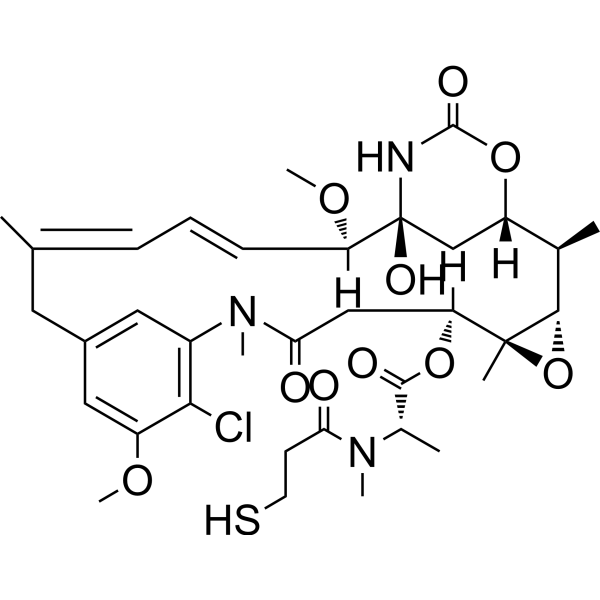 0 ImagesSynonyms: DM1; Maytansinoid DM1Mertansine (DM1) is a microtubulin inhibitor and is an antibody-conjugatable maytansinoid that is developed to overcome systemic toxicity associated with maytansine and to enhance tumor-specific delivery. Mertansine can be attached to a monoclonal antibody with a linker to create an antibody-drug conjugate (ADC).
-
Ansamitocin P-3
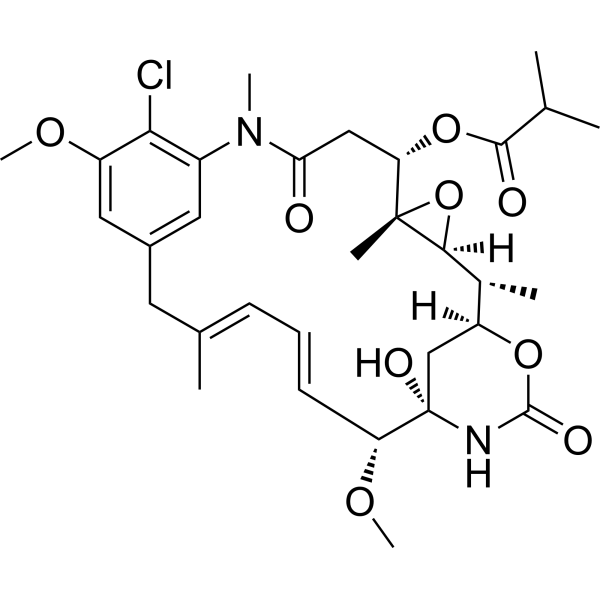 0 ImagesSynonyms: Antibiotic C 15003P3; Maytansinol isobutyrateAnsamitocin P-3 (Antibiotic C 15003P3) is a microtubule inhibitor. Ansamitocin P-3 is a macrocyclic antitumor antibiotic.
-
N-Me-L-Ala-maytansinol
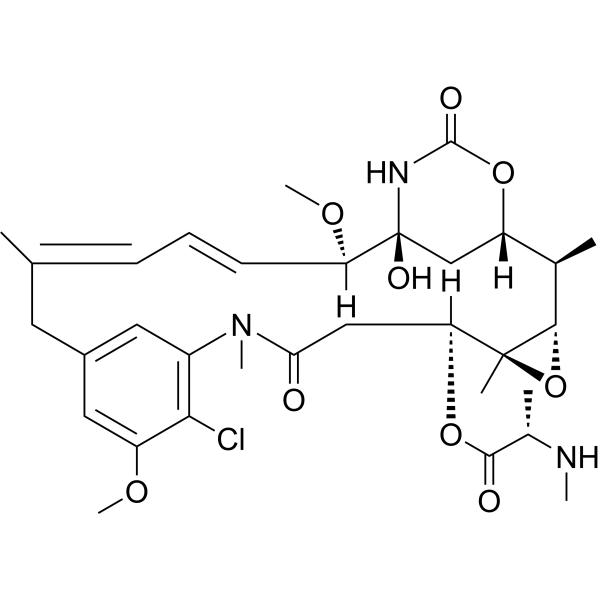 0 ImagesN-Me-L-Ala-maytansinol is a hydrophobic, cell permeable payload used for making antibody-drug conjugate (ADC).
-
DM4-SMe
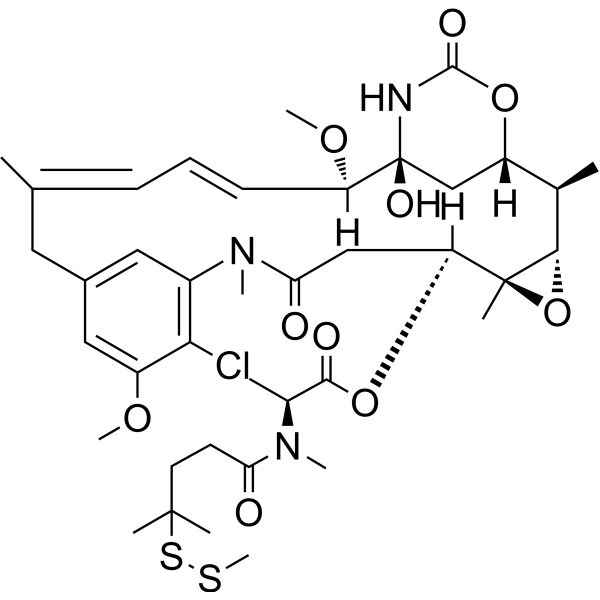 0 ImagesDM4-SMe is a metabolite of antibody-maytansin conjugates (AMCs) and a tubulin inhibitor, and also a cytotoxic moiety of antibody-drug conjugates (ADCs), which can be linked to antibody through disulfide bond or stable thioether bond. DM4-SMe inhibits KB cells with an IC50 of 0.026 nM. DM4-SMe is a highly toxic metabolite that can be oxidized and detoxified by human liver microsomes.
-
DM1-SMe
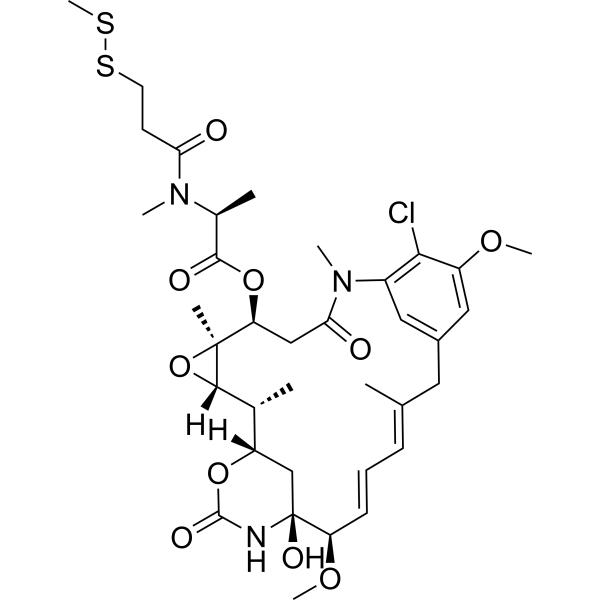 0 ImagesDM1-SMe is an unconjugated form of the Maytansinoid in IMGN901. DM1-SMe is the microtubule inhibitor and can be used as the ADC cytotoxin.
-
Mertansine (GMP)
 0 ImagesCat. No.: HY-19792GCAS No.: 139504-50-0Synonyms: DM1 (GMP); Maytansinoid DM1 (GMP)Mertansine (GMP) is the GMP-grade version of Mertansine (HY-19792). Mertansine (DM1) is a microtubulin inhibitor and is an antibody-conjugatable maytansinoid that is developed to overcome systemic toxicity associated with maytansine and to enhance tumor-specific delivery. Mertansine can be attached to a monoclonal antibody with a linker to create an antibody-drug conjugate (ADC).
-
DM3
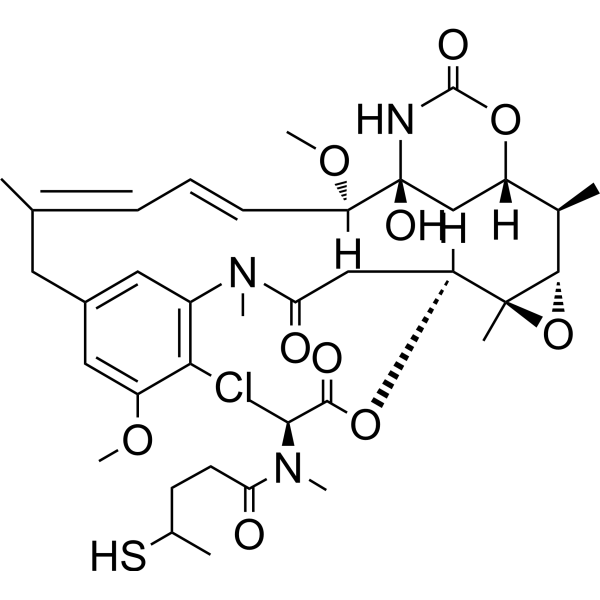 0 ImagesCat. No.: HY-130080CAS No.: 796073-54-6Synonyms: Maytansinoid DM3DM3 (Maytansinoid DM3), a Maytansine (HY-13674) analog bearing disulfide or thiol groups, and is a tubulin inhibitor. DM3 a cytotoxic moiety of antibody-drug conjugates (ADCs).
-
S-methyl DM1
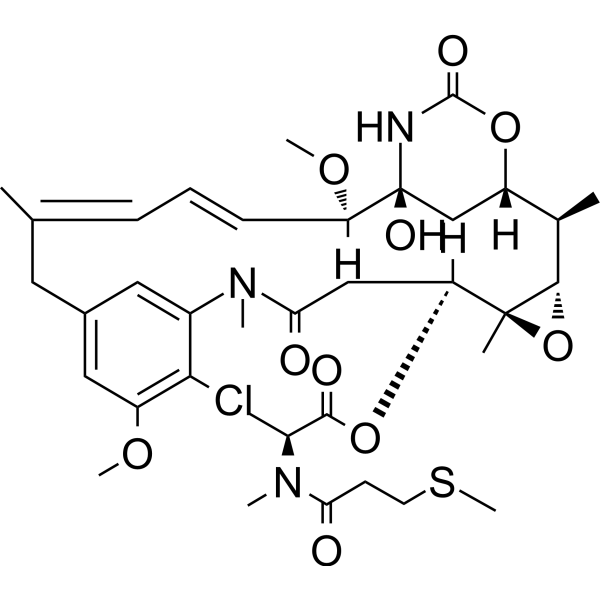 0 ImagesS-methyl DM1 is a thiomethyl derivative of Maytansine. S-methyl DM1 binds to tubulin with a Kd of 0.93 μM and inhibts microtubule polymerization. S-methyl DM1 potently suppresses microtubule dynamic instability and has anticancer effects.
-
Maytansinoid DM4
 0 ImagesCat. No.: HY-100503CAS No.: 799840-96-3Maytansinoid DM4 is a thiol-containing maytansine derivative with highly potent cytotoxicity. Maytansinoid DM4 can be used as a cytotoxic moiety of ADC.
-
DM3-SMe
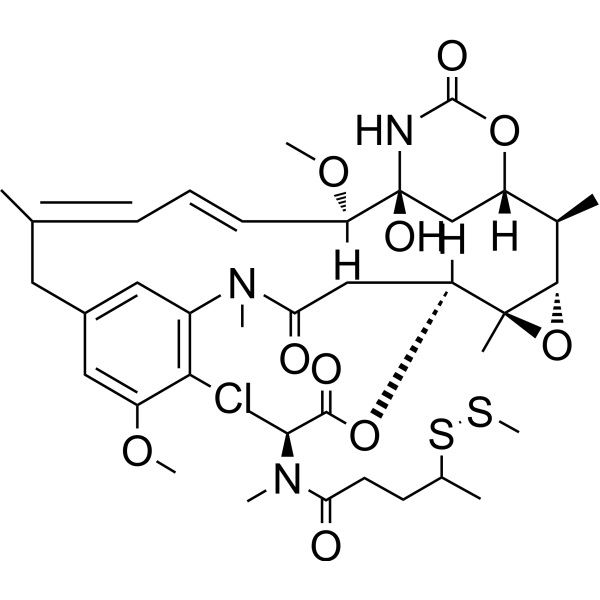 0 ImagesCat. No.: HY-130081CAS No.: 796073-70-6DM3-SMe is a maytansine derivative and a tubulin inhibitor, and is a cytotoxic moiety of antibody-drug conjugates (ADCs), which can be linked to antibody through disulfide bond or stable thioether bond. DM3-SMe shows highly cytotoxic activity in vitro with an IC50 of 0.0011 nM.



